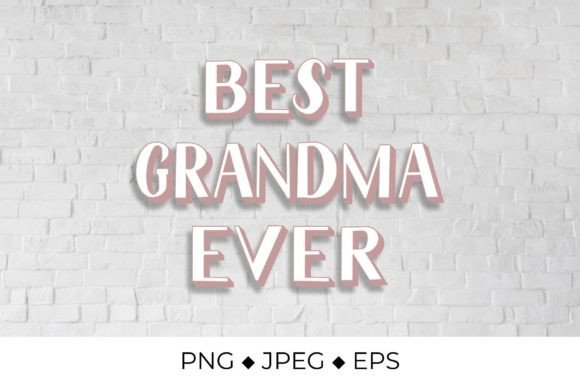
Reviewing Best Grandma Ever. Grandparents Day
As a designer who spends more time staring at stitch maps than finished garments, I have learned that the difference between a charming gift and a professional product often lies in the details of the source file. When I first pulled up Best Grandma Ever. Grandparents Day, my initial reaction was one of cautious optimism. The market for grandparent-themed items is saturated, yet the demand remains incredibly high, especially leading up to holidays and birthdays. This specific piece, categorized under Illustrations and Graphics, presents itself as a versatile asset, but does it hold up under the needle?
The First Impression: Mood and Layout
The visual personality of Best Grandma Ever. Grandparents Day leans heavily into warmth and nostalgia. It avoids the overly complex or cartoonish styles that can sometimes look cheap when translated into thread. Instead, the layout suggests a clean, readable design that prioritizes legibility. For an embroidery designer, this is crucial. Complex gradients and tiny details often get lost in translation, turning a crisp digital image into a muddy mess of thread breaks and puckering. This design appears to respect the limitations of the medium, offering shapes and lines that suggest a smooth stitching process.
The theme is universal, which makes it a safe bet for commercial use, but the execution needs to be sharp to stand out among thousands of similar listings. The quote format implies that typography is the hero here. In embroidery, text is unforgiving. If the kerning is off or the font weight is too thin, the final product will look amateurish. From a graphical standpoint, this design seems to balance decorative elements with the core message, creating a cohesive unit rather than disjointed clipart pieces slapped together.
Real-World Application: The Tote Bag Test
To truly evaluate a design, you have to imagine it on a physical object. I recently worked on a custom order for a boutique client who wanted a line of reusable tote bags for a local craft fair. The brief called for something heartfelt but durable. I considered using Best Grandma Ever. Grandparents Day for this project. Tote bags are typically made from canvas or heavy cotton, which provides a stable base for embroidery. However, the texture of the fabric can interfere with fine details.
In this scenario, the design’s performance would depend heavily on stitch density. If the design relies too much on dense fill stitches, it could cause the lightweight handles of a tote bag to pucker or distort. Conversely, if it utilizes a mix of satin stitch for borders and running stitch for finer details, it would lay flat and look professional. The versatility mentioned in the description—being usable as clipart and sublimation—suggests the lines are clean. For embroidery, this usually translates well, provided the digitizer has accounted for pull compensation.
Apparel and Custom Gifts
Beyond tote bags, this design is a strong candidate for custom apparel. Think sweatshirt embroidery or baby clothes. For a sweatshirt, the fuzzy texture of fleece can hide minor imperfections, making it a forgiving canvas for Best Grandma Ever. Grandparents Day. However, for baby embroidery, the stakes are higher. Parents want softness and durability. A design with high stitch density might feel stiff against a baby’s skin. Here, the designer must consider using lighter thread weights or adjusting the underlay to ensure comfort without sacrificing the visual impact of the quote.
Personalized gifts are another major avenue. Whether it is an apron for a baking enthusiast or a pillow cover for a living room refresh, the emotional connection of the phrase "Best Grandma Ever" drives sales. As an Etsy seller or small shop owner, you are not just selling thread on fabric; you are selling a sentiment. The clarity of this design ensures that the sentiment is read instantly, which is vital for buyer engagement.
Technical Considerations and Potential Pitfalls
While the aesthetic appeal is strong, there are areas where caution is necessary. Any designer working with Best Grandma Ever. Grandparents Day should be mindful of hoop size. If the design is large, it may require re-hooping, which introduces the risk of alignment errors. For smaller hoop sizes, scaling down the design might render some of the finer typographic elements illegible. Always check the minimum recommended size before committing to a project.
Fabric choice plays a pivotal role. On stretchy fabrics like jersey knits, a design with significant coverage can cause tunneling or distortion if not properly stabilized. Using a cut-away stabilizer is often recommended for garments that will be washed frequently, while tear-away might suffice for decorative items like wall hangings. Additionally, dark fabrics present a challenge. If the design includes light-colored elements, you must ensure that the digitizing includes a proper underlay to prevent the dark fabric from showing through the top stitches.
Another critical factor is the distinction between a sublimation design and an embroidery file. The product description notes that this can be used for sublimation on mugs and stickers. However, embroidery requires a different approach. A design that looks perfect in print may have too many color changes or unrealistic gradients for stitching. Before purchasing or using this as a digital embroidery file, verify that it has been properly digitized. Look for information on stitch count and color stops. If these details are not provided, reach out to the creator or test thoroughly on scrap fabric.
Enhancing Visual Appeal and Brand Consistency
For creative entrepreneurs, consistency is key. Using Best Grandma Ever. Grandparents Day across various products can help build a recognizable brand identity. Whether you are creating an embroidered patch for a jacket or a vinyl decal for a water bottle, maintaining a consistent visual style helps customers recognize your work. This design, with its clear lines and emotional resonance, fits well into a portfolio focused on family-centric, handmade products.
Thread colors also dictate the final look. While the digital preview might show specific hues, you have the freedom to customize. For a vintage look, consider using variegated threads or muted tones. For a modern, bold statement, high-contrast thread colors against a neutral fabric background can make the text pop. Testing the design in black and white mockups can help you assess the contrast and readability before you even thread the machine.
Practical Notes for the Embroidery Designer
- Test on Scrap Fabric: Never run a new design directly on your final garment. Use a similar fabric type and weight to check for puckering, thread breaks, and registration issues.
- Check Stabilizer Compatibility: Match your stabilizer to your fabric. Heavy designs need robust support, while delicate fabrics require gentle handling.
- Verify Licensing: Before selling finished items or digital products featuring Best Grandma Ever. Grandparents Day, confirm the license terms. Ensure you have the right to use it for commercial embroidery projects.
- Inspect Small Details: Zoom in on the design file. Are there any stray stitches or overlapping paths that could cause machine errors? Clean up the file if necessary.
- Consider the End User: Will this item be washed frequently? If so, ensure the stitch density and thread quality can withstand laundering without fraying or fading.
In conclusion, Best Grandma Ever. Grandparents Day offers a solid foundation for a variety of embroidery projects. Its strength lies in its emotional clarity and versatile layout. However, its success in the real world depends on the skill of the operator and the attention paid to technical details. By understanding the interplay between fabric, thread, and stitch structure, you can transform this graphic asset into a high-value handmade product that resonates with customers and stands the test of time.