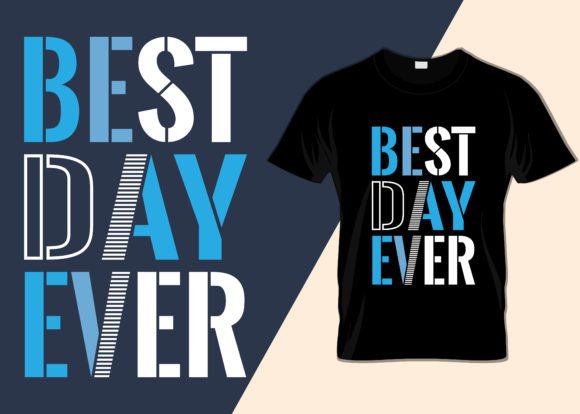
Reviewing the Best Day Ever T-shirt Design for Embroidery
As a designer who has spent years translating digital concepts into tangible stitched art, I approach every new graphic with a specific set of questions. Will this translate well to thread? How will it behave on different fabric weights? Is it versatile enough for both a high-end boutique item and a quick craft fair giveaway? Recently, I evaluated the Best Day Ever T-shirt Design, a minimalist typography piece that promises simplicity and cheer. While marketed primarily as a print-ready asset for apparel, its clean lines and bold statement make it a compelling candidate for embroidery projects, provided you understand how to adapt it from screen to stitch.
First Impressions and Visual Personality
The immediate appeal of this design lies in its restraint. In a market saturated with overly complex illustrations and dense graphics, the Best Day Ever quote stands out through its typographic confidence. The layout is balanced, creating a mood that is upbeat yet sophisticated. For an embroidery designer, this minimalism is a double-edged sword. On one hand, there are fewer elements to manage, which can reduce machine run time and thread breaks. On the other hand, typography requires precision. Any slight misalignment or uneven tension becomes immediately visible when stitching letters.
The visual personality of this graphic suggests versatility. It does not scream "childish," nor does it feel strictly corporate. This neutrality allows it to fit naturally into various product categories. When I first opened the files, I noted the clarity of the edges. For a T-Shirt Designs category item, this sharpness is crucial. In embroidery, we rely on clear boundaries to define our satin stitches and fill areas. A blurry or pixelated source file can lead to jagged edges in the final finished product, but the high-resolution assets included here provide a solid foundation for digitizing or direct application if using compatible methods.
Real-World Application Scenarios
To truly test the viability of any Graphics asset, I imagine it in real-life production scenarios. I recently considered this design for a custom order involving a set of canvas tote bags for a local bridal party. The phrase "Best Day Ever" is inherently celebratory, making it perfect for wedding-related merchandise. However, instead of printing, I envisioned it as a structured embroidered patch sewn onto heavy-duty cotton totes. The bold lettering would hold up well against the textured weave of the canvas, providing a tactile contrast that print cannot achieve.
Beyond totes, this design shines in custom apparel. Imagine it stitched onto the chest of a premium heavyweight sweatshirt. The simplicity of the text allows the quality of the garment and the sheen of the thread to take center stage. For Etsy sellers and small shop owners, this type of design is gold because it appeals to a broad demographic. It works equally well for a personalized gift for a graduate, a fun addition to a vacation wardrobe, or a cheerful element in nursery decor when scaled down for a baby onesie.
I also see potential in home goods. A kitchen towel embroidered with this phrase adds a touch of whimsy to daily chores. The key here is scale. On a towel, the design needs to be large enough to be legible but small enough to fit within standard hoop constraints without requiring excessive re-hooping. The minimalist nature of the text makes it easier to adjust size without losing the essence of the message, unlike intricate illustrations that degrade when shrunk.
Technical Considerations for Stitching
While the design is visually strong, translating it to a machine embroidery design requires careful technical planning. Typography is notoriously tricky in embroidery. Thin strokes can disappear into the fabric, while thick blocks can become stiff and uncomfortable. If you are digitizing this yourself from the provided AI File or SVG, pay close attention to stitch density. You want enough coverage to look professional, but not so much that the fabric puckers.
For the lettering, a combination of satin stitch for smaller text and fill stitch for larger, bolder characters often yields the best results. Satin stitches provide a smooth, glossy finish that highlights the curves of the letters, while fill stitches offer durability for larger areas. However, be mindful of the underlay. Proper underlay stitching is essential to anchor the top threads and prevent shifting, especially on stretchy fabrics like jersey knits used in t-shirts.
Fabric choice plays a massive role in the outcome. On smooth, tightly woven cotton, the crisp lines of the Best Day Ever T-shirt Design will look sharp and clean. On textured fabrics like linen or terry cloth, the details might get lost. In such cases, consider using a contrasting applique design technique, where the text is cut from felt or vinyl and stitched down, rather than relying solely on thread coverage. This approach reduces bulk and ensures legibility on challenging surfaces.
Navigating Challenges and Limitations
There are situations where this design should be used with caution. Small hoop sizes, such as 4x4 inches, may require significant scaling down, which could compromise the readability of the thinner parts of the font. Always test on scrap fabric first. Check how the thread colors interact with the background. High contrast is your friend here; white thread on white fabric will vanish, while black on navy might lack definition unless you use a metallic or bright accent color.
Additionally, consider the end-use of the product. Items that undergo frequent washing, like baby clothes or kitchen towels, need secure stitching. Ensure that your digitizing includes tie-offs at the start and end of each letter to prevent unraveling. For curved surfaces like caps, the design must be adjusted to account for the curvature, otherwise, the text may appear distorted when viewed from the front.
Enhancing Brand Value and Customer Trust
For craft business owners, the perceived value of an embroidered item is often higher than a printed one. The texture and dimensionality of thread convey craftsmanship and effort. Using a clean, professional design like this helps build brand consistency. It signals to customers that you care about aesthetics and quality. When buyers see a well-executed embroidered piece, they are more likely to trust your brand and return for future purchases.
This design also lends itself well to printable mockup creation. Before committing to production, use the high-resolution PNG File to create realistic previews for your online store. Show the design on various products—tote bags, sweatshirts, and pillows—to help customers visualize the final result. This reduces hesitation and can increase conversion rates.
Practical Notes for Designers
- Test First: Always stitch out a sample on the actual fabric you plan to use. Different materials react differently to tension and density.
- Check Licensing: While the product includes multiple file formats like EPS File and SVG, always confirm the license terms before selling finished items or digital products. Ensure you have commercial rights if you are an Etsy seller.
- Stabilizer Selection: Use the appropriate stabilizer for your fabric. Cut-away stabilizer is generally best for stretchy knits, while tear-away works well for stable wovens.
- Color Contrast: Experiment with thread colors. Sometimes a subtle tone-on-tone look is elegant, but for maximum impact, choose colors that pop against the background.
- Hoop Size: Confirm that the scaled design fits comfortably within your hoop, leaving enough margin for secure clamping.
In conclusion, the Best Day Ever T-shirt Design is a versatile asset that transcends its original print-focused description. With thoughtful digitizing and material selection, it becomes a powerful tool for creating high-quality embroidery projects. Whether you are making a holiday embroidery gift or stocking your small shop product line, this design offers the clarity and charm needed to engage customers and elevate your handmade offerings.