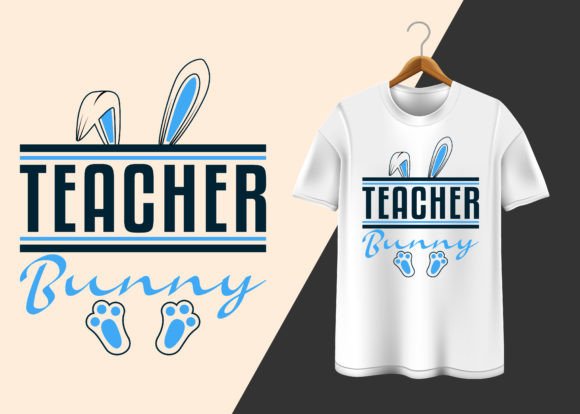
Teacher Bunny: A Practical Review for Embroidery Projects
As a designer who has spent years digitizing and stitching thousands of patterns, I approach every new graphic with a mix of curiosity and caution. We have all been there: you see a cute design online, download it, and then realize halfway through the hoop that the details are too fine or the spacing is off. That is why I took a close look at Teacher Bunny. This is not just another holiday graphic; it is a specific typographic composition aimed at the Easter market, and understanding how it translates from a digital screen to actual thread is crucial for anyone running a craft business or creating personalized gifts.
First Impressions and Visual Personality
The first thing that strikes you about Teacher Bunny is its playful yet structured layout. It combines the whimsy of a holiday theme with the clarity needed for typography. The mood is light, celebratory, and professional enough for educational settings. For an embroidery designer, the visual personality suggests a design that relies heavily on clean lines and balanced negative space. When I visualize this stitched out, I am looking for how the letters interact with the bunny motif. Is it cluttered? Does the text remain legible? In this case, the design feels intentional, suggesting that it was created with readability in mind, which is vital for any custom apparel or handmade product intended for public wear.
Real-World Application: The Custom Tote Scenario
To truly evaluate a design, I like to imagine it in a real-life scenario. Let’s say a local preschool teacher orders a custom tote bag design for her classroom Easter party. She wants something that says "Teacher" but with a festive twist. Teacher Bunny fits this brief perfectly. However, the execution matters. If I were stitching this onto a canvas tote, I would need to consider the fabric texture. Canvas is sturdy, but it can be unforgiving if the stitch density is too high. I would likely opt for a medium-weight cut-away stabilizer to prevent puckering, ensuring that the typography remains crisp and the bunny shape holds its form without distorting the bag.
This same logic applies to sweatshirt embroidery. A fleece or cotton-blend sweatshirt provides a soft background, but the nap of the fabric can swallow small details. If Teacher Bunny includes fine lines in the bunny’s ears or intricate serifs in the font, I would need to adjust my machine settings. Perhaps increasing the stitch density slightly or choosing a thicker rayon thread would help the design pop against the textured background. For a personalized gift, these small adjustments make the difference between a amateur-looking item and a professional finished product.
Navigating Technical Challenges
While the aesthetic is strong, we must discuss where this design requires careful handling. Typography-based designs are notoriously tricky in embroidery. Small lettering can become illegible if the stitches merge, especially after washing. If you are planning to use Teacher Bunny on a cap or a curved surface, you must check the hoop size compatibility. A standard 5x7 hoop might work for a chest logo, but a smaller hoop could crop essential parts of the design. Always measure the actual dimensions of the graphic against your available hoops before starting.
Another critical factor is the thread colors. Since this is a holiday design, you might be tempted to use bright pastels. However, contrast is key. If you are stitching on a dark fabric, ensure that the thread colors provide enough distinction between the text and the background. A lack of contrast can make the design look muddy from a distance. I recommend testing the design on scrap fabric first, ideally in both light and dark variations, to see how the satin stitch and fill stitch areas behave. This step saves time and materials in the long run.
File Formats and Digital Assets
One aspect that stands out in the product description is the inclusion of high-resolution digital files. The package includes Print-Ready 7000×5000-size Transparent PNGs, along with AI and EPS files. For those of us who also sell digital embroidery file previews or create printable mockup listings for Etsy, these assets are invaluable. You can use the PNGs to create realistic product photos for your online shop without having to stitch every single colorway physically. This saves significant time for Etsy sellers and small shop product creators who need to maintain a consistent brand presence across multiple platforms.
However, it is important to note that AI and EPS files are vector graphics, not necessarily embroidery formats like DST or PES. If you are an embroiderer, you will still need to digitize this design or ensure that the provider offers specific machine-readable formats. If the product listing does not explicitly state that machine embroidery files are included, you must assume these are graphic assets for printing or sublimation. Always confirm licensing before selling commercial embroidery items or using the design in client projects.
Enhancing Brand Value and Customer Trust
Using a well-balanced design like Teacher Bunny can significantly enhance the perceived value of your craft business. Customers associate clean, professional stitching with quality. When a parent buys an embroidered patch or a baby embroidery item for their child, they are looking for durability and charm. A design that holds up after multiple washes builds trust. It shows that you care about the longevity of the holiday embroidery piece, not just the initial sale.
Furthermore, this design fits well into the broader category of T-Shirt Designs and Graphics that are trending for seasonal sales. By offering products that feature recognizable, high-quality motifs, you position your brand as a go-to source for festive, thoughtful items. Whether it is for a wedding gift with a spring theme or a boutique’s seasonal collection, the versatility of the design allows for creative adaptation.
Final Designer Notes
Before you commit to a large batch of custom apparel, take a moment to review the details. Check the stitch density in the densest parts of the bunny’s body. Ensure that the running stitch outlines are secure. If you are new to this type of work, start with a simple cotton fabric to master the tension and thread breakage points. Remember, the goal is to create a handmade product that feels special and durable.
In conclusion, Teacher Bunny offers a solid foundation for spring-themed projects. Its strength lies in its clear typography and charming motif, but its success depends on your technical execution. By paying attention to stabilizer choice, thread contrast, and fabric suitability, you can turn this digital asset into a standout physical product. Whether you are decorating kitchen towels, pillow covers, or aprons, let the design guide your technique, not the other way around. Happy stitching.