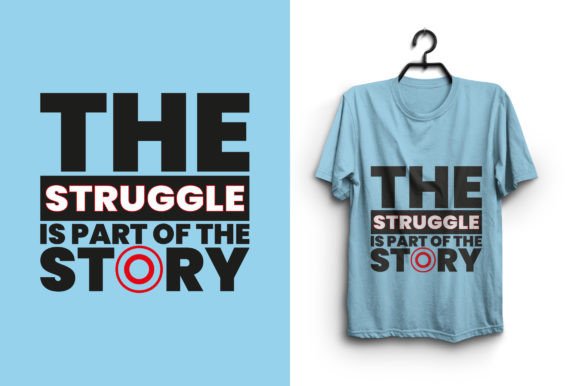
Reviewing The Struggle is Part of the Story for Embroidery
As a designer who has spent countless hours digitizing and stitching out quotes, I have learned that typography in embroidery is a delicate balance. It is not just about readability; it is about how the thread interacts with the fabric to convey emotion. When I first pulled up The Struggle is Part of the Story design file, my immediate reaction was one of appreciation for its thematic weight. This is not a frivolous slogan. It is a grounding statement, perfect for customers seeking meaning in their handmade items. For embroidery designers and small business owners, this piece offers a unique opportunity to create products that resonate on a deeper level than standard decorative motifs.
First Impressions and Visual Personality
The layout of this quote suggests a modern, clean aesthetic. In the context of T-Shirt Designs and general Graphics, simplicity often wins because complex fonts can become illegible when translated into thread. My initial assessment focuses on the flow of the letters. Does the design allow for smooth satin stitches, or will it require dense fill stitches that might pucker the fabric? From a visual standpoint, the phrase carries a mood of resilience. It feels at home on items meant for comfort and daily wear, such as a heavy cotton sweatshirt or a durable canvas tote bag. The design does not scream for attention; rather, it invites the viewer to pause and reflect, which is a valuable trait for boutique branding and personalized gifts.
Real-World Application: The Custom Sweatshirt Scenario
To truly evaluate a machine embroidery design, you must imagine it on a finished product. I recently considered this design for a custom order involving a high-quality, heather grey crewneck sweatshirt. The client wanted something subtle yet empowering for a team-building retreat. The Struggle is Part of the Story fit the brief perfectly. However, placing text on a curved surface like a chest area requires precision. I had to consider the hoop size carefully. If the design is too wide, it may distort near the side seams. If it is too tall, it might interfere with the neckline.
In this scenario, the clarity of the embroidery file formats becomes crucial. The availability of EPS, PDF, SVG, PNG, and DXF files means that this asset is versatile. While the DXF and SVG files are essential for cutting machines if you plan to create an applique design or vinyl hybrid, the embroidery-specific formats need to be checked for stitch type. For a sweatshirt, I would recommend using a combination of satin stitch for smaller elements and a light fill stitch for larger letters to maintain flexibility. The texture of the fleece means that a high stitch density could cause the fabric to bunch up, so adjusting the underlay and pull compensation is a necessary step before the final run.
Fabric Considerations and Stitching Clarity
Not every fabric treats typography kindly. When working with The Struggle is Part of the Story, you must be mindful of the material. On a smooth cotton twill, such as those used for tote bag design projects or aprons, the stitches will lay flat and crisp. The contrast between the thread and the fabric will define the legibility. However, on textured fabrics like linen or waffle knit, fine details can get lost. If you are creating a personalized gift like a kitchen towel, ensure that the font weight is substantial enough to stand out against the weave.
Dark fabrics present another challenge. If you are stitching this on a navy or black garment, you need high-contrast thread colors. White, cream, or metallic threads can pop beautifully, but they also show every imperfection in the tension. I always advise testing the design on scrap fabric first. This allows you to check if the corners of the letters are sharp or if they appear rounded due to excessive density. For baby embroidery items, such as onesies or burp cloths, softness is paramount. You must ensure that the back of the stitching is clean and that the stabilizer used does not leave a stiff residue against sensitive skin.
Commercial Viability for Etsy Sellers and Crafters
For Etsy sellers and creative entrepreneurs, the marketability of a design lies in its emotional connection. The Struggle is Part of the Story taps into the current trend of mindfulness and mental health awareness. This makes it highly suitable for holiday embroidery gifts, graduation presents, or support items for someone going through a difficult time. As a small shop product, it can be positioned as a premium item because of its meaningful message.
When listing this as a digital embroidery file or selling the finished product, transparency about the file types is key. Buyers appreciate knowing they receive EPS, PDF, SVG, PNG, and DXF formats, as this indicates professional preparation. However, if you are selling the physical embroidered item, your value proposition is the quality of the stitch-out. Use high-resolution printable mockup images to show how the design looks on various backgrounds. Compare light and dark fabric options in your product photos to help customers visualize the final result. This builds trust and reduces return rates due to mismatched expectations.
Technical Notes for Professional Results
Before committing to a large batch of custom apparel or commercial embroidery projects, there are several technical checks you should perform. First, verify the license terms. While the product features mention easy changes, you must confirm whether the license allows for unlimited commercial sales of finished items or if there are restrictions on digital redistribution. Never assume; always read the included documentation.
- Test on Scrap Fabric: Always stitch out a sample on the same material you intend to use for the final product. This helps you identify any puckering or thread breaks.
- Check Stabilizer Compatibility: Use a cut-away stabilizer for stretchy fabrics like t-shirts and jerseys to prevent distortion over time. For woven fabrics like tote bags, a tear-away may suffice.
- Inspect Small Details: Zoom in on the digital preview. Are there any tiny connecting stitches that might snag? If so, consider trimming them manually after stitching.
- Contrast Testing: View the design in black and white to ensure the shape remains recognizable without color reliance. This is crucial for accessibility and visual impact.
- Hoop Size Confirmation: Ensure the design fits within your machine’s maximum hoop size without requiring re-hooping, which can lead to alignment issues.
Final Thoughts on Design Utility
In the world of design assets for makers, functionality meets aesthetics. The Struggle is Part of the Story is a strong contender for any portfolio focused on meaningful, text-based embroidery. It performs well across a variety of applications, from embroidered patch creations to large-scale sweatshirt embroidery. Its strength lies in its versatility and emotional resonance. By paying attention to fabric choice, stitch density, and proper stabilization, you can transform this digital file into a tangible product that customers cherish. Whether you are a hobbyist looking to create a thoughtful gift or a seasoned professional expanding your craft business inventory, this design offers a solid foundation for high-quality work. Remember, the success of the final product depends not just on the design itself, but on the care and technical expertise applied during the stitching process.